
- 01.03.2026
- Kategorie Mediävistik Literaturwissenschaft Kulturgeschichte Forschung im Fokus
The Feral Icelander: Victor Hugo’s Depiction of the North in Han d’Islande
von Nachhallende Netzwerke / Resonating Networks
Find of the month: March 2026
by Ela Sefcikova
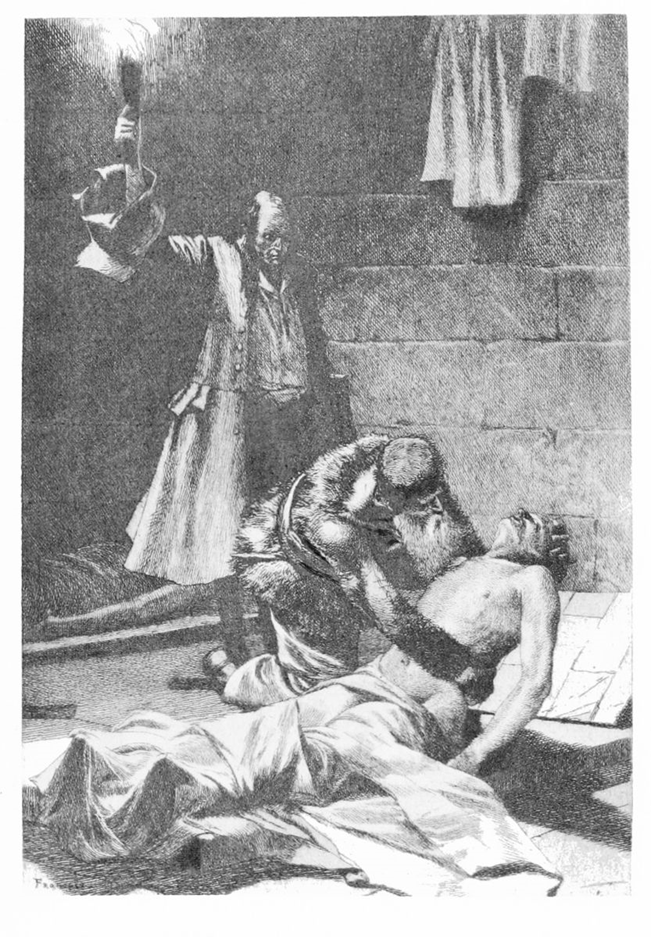
In 1823, at the age of twenty-one, Victor Hugo published his first novel, Han d’Islande (Hans of Iceland). In a letter he wrote in 1822 to Adèle Foucher, his future wife, he states that:
Je passai beaucoup de temps à amasser pour ce roman des matériaux historiques et géographiques, et plus de temps encore à en mûrir la conception, à en disposer les masses, à en combiner les détails (Hugo 1822 [1901]: 226).
I spent a lot of time gathering historical and geographical material for this novel, and even more time maturing the concept, arranging the masses, and combining the details (my translation).
Much of the historical and geographical material to which Hugo refers appears to have been sourced from Paul-Henri Mallet’s Histoire de Dannemarc (1755–1777), which popularised the history of the North for the first time to a broad European reading public. During my research on Mallet’s use of the term mythologie in relation to the Icelandic texts, I came upon a body of scholarship examining the links between the Histoire de Dannemarc and Han d’Islande; Beatrice Seth-Smith, for example, argues that Hugo drew on material from across the nine volumes of the third edition of the Histoire de Dannemarc as inspiration for his work (Seth-Smith 1918).
Han d’Islande is set in Norway, which at the time was under Danish rule, and Iceland figures as a dramatic, inhospitable and mostly unknown space of the distant North. Its wilderness is reflected in the character of Hans of Iceland, who describes himself in the text as:
Je suis le démon de Klipstadur. Ma mère est cette vieille Islande, l’île des volcans. Elle ne formait autrefois qu’une montagne, mais elle a été écrasée par la main d’un géant qui s’appuya sur sa cime en tombant du ciel […] je suis le descendant d’Ingolphe l’Exterminateur, et je porte en moi son esprit. J’ai commis plus de meurtres et allumé plus d’incendies que vous n’avez à vous tous prononcé d’arrêts iniques dans votre vie (Hugo 1823 [1963]: 136).
I am the demon of Klipstadur. My mother was old Iceland, the land of volcanoes. Once that land was but one huge mountain; it was crushed by the hand of a giant, who fell from heaven, and rested on its highest peak […] I am a descendant of Ingulf the Destroyer, and I bear his spirit within me. I have committed more murders and kindled more fires than all of you put together ever uttered unjust sentences in your lives (transl. Langdon Alger 1891: 478).
A strong connection is drawn within the text between landscape, heritage and disposition; Hans describes himself as being as harsh as the rocky, volcanic landscape that birthed him. The wildness of Hans’ place of origin is matched by his fearsome appearance:
Les traits du petit homme, que la lumière faisait vivement ressortir, avaient quelque chose d’extraordinairement sauvage. Sa barbe était rousse et touffue, et son front, caché sous un bonnet de peau d’élan, paraissait hérissé de cheveux de même couleur ; sa bouche était large, ses lèvres épaisses, ses dents blanches, aigües et séparées ; son nez, recourbé comme le bec de l’aigle ; et son œil gris bleu, extrêmement mobile, lançait sur Spiagudry un regard oblique, où la férocité du tigre n’était tempérée que par la malice du singe. Ce personnage singulier était armé d’un large sabre, d’un poignard sans fourreau, et d’une hache à tranchants de pierre, sur le long manche de laquelle il était appuyé ; ses mains étaient couvertes de gros gants de peau de renard bleu (Hugo 1823 [1963]: 32).
The features of the little man, thrown into vivid relief by the light, were singularly wild and fierce. His beard was red and bushy, and his forehead, hidden under an elkskin cap, seemed bristling with hair of the same color; his mouth was large, his lips thick, his teeth white, sharp, and far apart, his nose hooked like an eagle’s beak; and his grayish-blue eyes, which were extremely quick, flashed a side glance at Spiagudry, in which the ferocity of a tiger was only tempered by the malice of a monkey. This singular character was armed with a broadsword, an unsheathed dagger, and a stone axe, upon whose long handle he leaned; his hands were covered in thick gloves made of a blue fox-skin (transl. Langdon Alger 1891: 68).
The description of Hans is strongly animalistic: his clothes, facial features, movements and personality are all described in relation to those of various animals, from the elks and foxes whose skins he wears to the tigers and monkeys whose reflexes and disposition are reflected in his eyes. The stone axe that he carries, his bushy, bristling hair and his sharp, widely spaced teeth recall nineteenth-century stereotypes of ‘primitive’ peoples, in tune with animals and the surrounding landscape in a way that ‘civilised’ peoples no longer were. Through Hans, the reader gleans an image of Iceland that is as wild and unkempt as the bandit’s beard, as dangerous as his unsheathed dagger and as rugged as the crash-site of a giant falling from heaven.
References
Hugo, Victor 1822. Samedi soir (16 février). Repr. in Lettres á la Fiancée (1820–1822). Paris: Nelson, 219–228.
Hugo, Victor 1823. Han d’Islande. Repr. in Victor Hugo: Romans [1963]. Henri Guillemin (ed.). Paris: Éditions du Seuil.
Langdon Alger, A. 1891. Hans of Iceland. Boston: Estes and Lauriat.
Seth-Smith, Beatrice C. 1918. Mallet’s “Histoire de Dannemarc” as a Source of “Han d’Islande”. The Modern Language Review 13.3: 297–311.